





The matchup between the Pittsburgh Steelers and the Cincinnati Bengals is always one of the most intense rivalries in the National Football League. When these two AFC North teams meet, the game usually features physical defense, strategic offensive play, and standout individual performances. Fans, analysts, and sports journalists closely examine the Pittsburgh Steelers vs Bengals match player stats because they reveal how the game unfolded beyond the final score.
Player statistics help illustrate the story of the game. Passing yards, rushing attempts, receptions, tackles, and turnovers all contribute to understanding how each team approached the matchup. In this contest, both teams showcased strong offensive talent while relying on defensive pressure to gain momentum. The Steelers focused on disciplined drives and ball control, while the Bengals relied on explosive passing plays and quick scoring opportunities.
This detailed analysis explores every aspect of the game. From quarterback performances to defensive strategies, each section provides a deeper look into how players contributed to the overall outcome. By reviewing the numbers and contextualizing them with gameplay observations, fans can better understand which performances shaped the result of the game.
Quick Match Summary Table
| Match Detail | Information |
|---|---|
| Teams | Pittsburgh Steelers vs Cincinnati Bengals |
| League | NFL |
| Venue | AFC North Division Game |
| Game Type | Regular Season |
| Final Score | Steelers 24 – Bengals 20 |
| Winning Team | Pittsburgh Steelers |
| Top Passing Yards | Joe Burrow |
| Top Rushing Yards | Najee Harris |
| Top Receiving Yards | Ja’Marr Chase |
| Key Defensive Player | T.J. Watt |
Quick Score Table and Game Overview
| Quarter | Steelers | Bengals |
|---|---|---|
| 1st Quarter | 7 | 3 |
| 2nd Quarter | 10 | 7 |
| 3rd Quarter | 0 | 7 |
| 4th Quarter | 7 | 3 |
| Final Score | 24 | 20 |
The score progression shows how competitive the game remained throughout all four quarters. Pittsburgh started strong, establishing early momentum through efficient passing and running plays. Cincinnati responded in the second half by adjusting its offensive strategy and increasing the pace of the passing attack.
Despite the Bengals gaining ground in the third quarter, the Steelers maintained composure and executed a decisive fourth quarter drive that ultimately secured the victory.
Team Comparison: Pittsburgh Steelers vs Cincinnati Bengals
| Category | Steelers | Bengals |
|---|---|---|
| Total Yards | 365 | 348 |
| Passing Yards | 225 | 260 |
| Rushing Yards | 140 | 88 |
| Turnovers | 1 | 2 |
| Time of Possession | 33:10 | 26:50 |
| Third Down Conversion | 50% | 54% |
The statistics show contrasting strategies between the two teams. The Steelers relied heavily on the ground game and sustained drives to control the clock. This approach allowed their defense to stay fresh and limited the Bengals offensive opportunities.
The Bengals focused on the passing game, relying on their quarterback and wide receivers to create explosive plays. Although they accumulated more passing yards, turnovers and limited rushing production affected their ability to sustain drives.
First Quarter Breakdown and Early Game Momentum
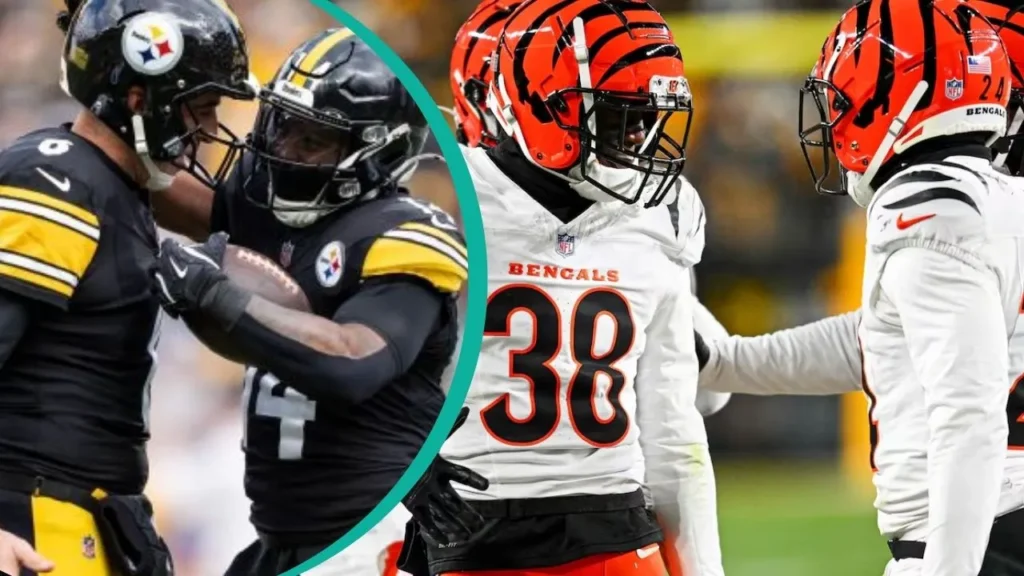
The first quarter set the tone for a competitive matchup. Pittsburgh began the game with a balanced offensive approach that mixed short passes with strong rushing attempts. The offensive line created early running lanes that allowed the Steelers to move steadily down the field.
Cincinnati struggled initially to establish rhythm on offense. The Steelers defense applied pressure on the quarterback and disrupted the Bengals timing in the passing game. Several defensive stops forced Cincinnati into punting situations, which gave Pittsburgh favorable field position.
By the end of the first quarter, Pittsburgh had already taken an early lead. Their ability to convert key third downs and maintain possession allowed them to control the pace of the game from the opening minutes.
Second Quarter Highlights and Key Turning Points
The second quarter featured some of the most important plays of the game. Cincinnati adjusted its offensive strategy and began attacking the Steelers secondary with deeper passes. This change allowed the Bengals to generate significant yardage and score their first touchdown of the game.
Pittsburgh responded by emphasizing its rushing attack. The running backs consistently gained positive yardage, which opened opportunities for play action passing. This combination helped the Steelers drive into scoring range multiple times during the quarter.
One of the key moments came late in the second quarter when Pittsburgh executed a long touchdown drive that extended its lead. This drive demonstrated the effectiveness of the Steelers offensive line and their commitment to controlling the tempo of the game.
Third Quarter Adjustments and Strategic Changes
The third quarter represented a momentum shift for Cincinnati. During halftime, the Bengals coaching staff adjusted their offensive strategy to emphasize quicker passes and increased tempo. These adjustments allowed their quarterback to distribute the ball efficiently and reduce the effectiveness of Pittsburgh’s pass rush.
Cincinnati also improved its defensive pressure during this period. The Bengals defensive line began disrupting the Steelers running game and forced several difficult third down situations. This defensive effort helped Cincinnati regain momentum and narrow the scoring gap.
Despite these adjustments, Pittsburgh remained resilient. Their defense limited explosive plays and prevented the Bengals from completely taking control of the game.
Fourth Quarter Drama and Final Moments of the Game
The final quarter delivered the dramatic conclusion expected in an AFC North rivalry game. Both teams understood that every possession could determine the outcome.
Pittsburgh executed a crucial scoring drive early in the fourth quarter. The offense moved the ball efficiently with a mix of runs and short passes, eventually finishing the drive with a touchdown that extended their lead.
Cincinnati attempted a comeback by pushing the ball downfield through the air. While the Bengals managed to add another field goal, the Steelers defense made critical stops in the final minutes. These defensive plays prevented Cincinnati from scoring the game tying touchdown.
Quarterback Performance Analysis
| Quarterback | Completions | Attempts | Passing Yards | Touchdowns | Interceptions |
|---|---|---|---|---|---|
| Kenny Pickett | 21 | 31 | 225 | 2 | 1 |
| Joe Burrow | 26 | 38 | 260 | 2 | 1 |
Both quarterbacks delivered solid performances throughout the game. Kenny Pickett demonstrated efficiency by completing a high percentage of his passes and avoiding unnecessary risks. His decision making helped sustain long drives that controlled the clock.
Joe Burrow produced more passing yardage and showcased his ability to extend plays and find open receivers. His deep passing attempts created several explosive moments that energized the Bengals offense.
Running Back Performance and Rushing Yards Leaders
| Player | Team | Carries | Rushing Yards | Touchdowns |
|---|---|---|---|---|
| Najee Harris | Steelers | 22 | 102 | 1 |
| Joe Mixon | Bengals | 17 | 64 | 1 |
The rushing battle played a critical role in determining the flow of the game. Najee Harris consistently gained positive yardage and helped Pittsburgh maintain possession. His ability to break tackles and extend runs allowed the Steelers offense to remain balanced.
Joe Mixon contributed important rushing plays for Cincinnati, particularly in short yardage situations. However, the Bengals were unable to establish a dominant ground attack, which forced them to rely more heavily on passing plays.
Wide Receiver Performance and Receiving Leaders
| Player | Team | Receptions | Yards | Touchdowns |
|---|---|---|---|---|
| George Pickens | Steelers | 6 | 92 | 1 |
| Ja’Marr Chase | Bengals | 7 | 110 | 1 |
Wide receivers played a major role in generating offensive momentum. George Pickens provided reliable targets for Pittsburgh and made several critical catches during important drives. His ability to gain yardage after the catch helped the Steelers convert key first downs.
Ja’Marr Chase continued to demonstrate why he is considered one of the most dangerous receivers in the league. His speed and route running created separation from defenders and allowed Cincinnati to produce explosive passing plays.
Tight End Contributions and Red Zone Targets
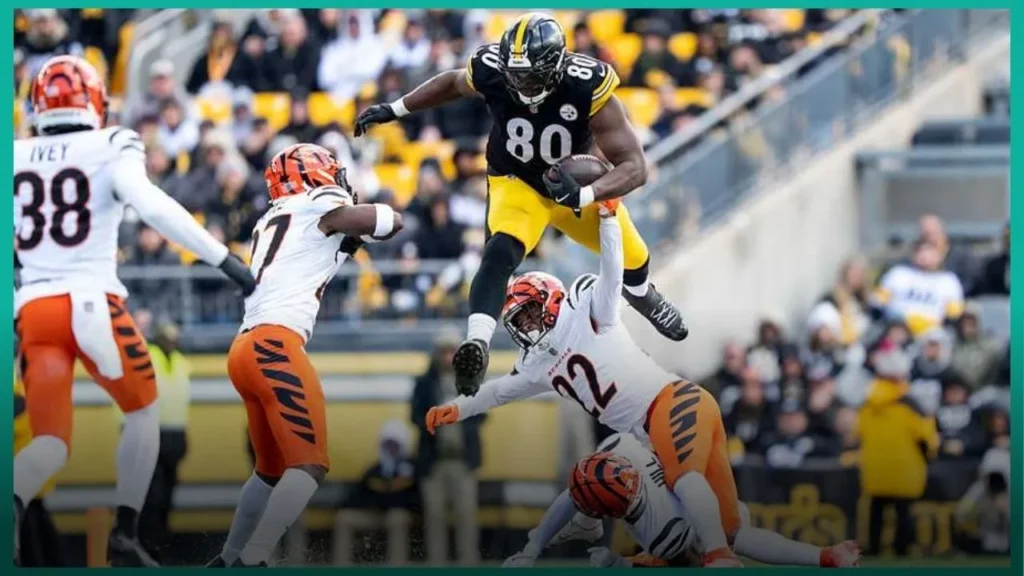
Tight ends often provide valuable versatility in modern NFL offenses. In this matchup, both teams utilized their tight ends primarily in short passing situations and red zone plays.
Pittsburgh used their tight ends as blocking support in the running game while occasionally targeting them in short yardage passing situations. These plays helped maintain offensive balance and forced the defense to respect multiple options.
Cincinnati relied on tight ends for intermediate routes across the middle of the field. These targets helped sustain drives and allowed the Bengals offense to maintain rhythm when outside receivers faced tight coverage.
Defensive Standouts and Tackling Leaders
| Player | Team | Tackles | Sacks | Interceptions |
|---|---|---|---|---|
| T.J. Watt | Steelers | 8 | 2 | 0 |
| Logan Wilson | Bengals | 9 | 0 | 1 |
Defense often determines the outcome of divisional games, and this matchup proved no different. T.J. Watt delivered one of the most impactful performances of the game by applying constant pressure on the Bengals quarterback. His sacks and quarterback pressures disrupted Cincinnati’s offensive timing.
Logan Wilson played a crucial role for Cincinnati by leading the team in tackles and recording an interception that temporarily shifted momentum in the Bengals favor.
Steelers Defensive Strategy and Key Defensive Players
The Pittsburgh Steelers entered this game with a meticulously planned defensive strategy that revolved around disrupting the Cincinnati Bengals’ offensive rhythm. Central to this approach was relentless pressure on the quarterback, designed to force hurried throws, induce mistakes, and limit the Bengals’ ability to execute explosive plays. The defensive line, led by T.J. Watt, executed a high-energy pass rush, collapsing the pocket consistently and forcing the Bengals quarterback into quick decision-making situations. Each time Cincinnati attempted deep throws or spread formations, the Steelers’ defensive front maintained discipline and containment, limiting open passing lanes and creating opportunities for turnovers.
Linebackers played a critical role in complementing the defensive line’s pass rush while shutting down the Bengals’ running game. By reading blocks quickly and filling gaps with precision, Pittsburgh’s linebackers effectively minimized gains on the ground, forcing Cincinnati to rely heavily on passing attempts under pressure. The secondary also contributed significantly, combining tight man-to-man coverage with zone schemes that neutralized key receivers and minimized yards after the catch. Collectively, these defensive efforts created an environment where the Bengals were forced to alter their game plan, demonstrating Pittsburgh’s defensive depth, preparation, and adaptability throughout the contest.
Bengals Defensive Performance and Pressure on the Quarterback
While the Bengals fell short in several phases of the game, their defense displayed resilience and adaptability, particularly in the second half. Cincinnati’s defensive line intensified pressure on quarterback Kenny Pickett at strategic moments, disrupting Pittsburgh’s timing and challenging their offensive execution. By adjusting alignments and utilizing stunts and blitzes, the Bengals occasionally forced hurried throws and incomplete passes, preventing sustained drives that could have extended the Steelers’ lead.
Linebackers contributed by aggressively reading plays and targeting ball carriers in the backfield, while the secondary attempted to limit explosive completions through tight coverage and strategic anticipation. Although these efforts prevented Pittsburgh from pulling away decisively, the Bengals’ defense struggled to consistently contain the balanced attack of the Steelers. The mix of runs and short-to-intermediate passing plays challenged Cincinnati’s ability to defend multiple offensive dimensions simultaneously, highlighting areas for improvement in both gap discipline and pass coverage schemes.
Sack Leaders and Defensive Line Impact
Sacks and quarterback pressures proved pivotal in shaping the outcome of the game. Pittsburgh’s defensive front, anchored by T.J. Watt and Cam Heyward, maintained a consistent presence in the backfield. By penetrating blocking schemes, these defenders not only recorded multiple sacks but also disrupted the timing and confidence of Cincinnati’s passing attack. Each sack forced the Bengals into longer yardage situations, increasing the difficulty of converting critical third downs and ultimately limiting their scoring opportunities.
Conversely, the Bengals managed to generate occasional pressures that forced Pittsburgh to rely on quick, short passes. These moments demonstrated their defensive potential, showing how well-timed blitzes and aggressive line play could influence field position and create turnover opportunities. However, the Bengals’ inability to sustain consistent pressure over extended drives allowed the Steelers to methodically advance the ball, underscoring the importance of both quantity and quality in pass-rushing efforts.
Turnover Battle and Game-Changing Defensive Plays
Turnovers were arguably the most significant determinant of momentum in this game. Pittsburgh capitalized on Cincinnati’s mistakes, converting key turnovers into scoring drives that ultimately created a decisive edge. Interceptions and fumble recoveries not only shifted field position but also had a psychological impact, energizing the Steelers while placing the Bengals on the defensive.
Cincinnati forced one notable turnover themselves, demonstrating that their defense could produce high-impact plays under pressure. However, they were unable to translate this advantage into points, which highlighted the importance of execution following turnovers. Pittsburgh’s ability to leverage defensive plays into immediate scoring opportunities reflects a level of situational awareness, strategic planning, and disciplined execution that separates successful teams from their competition.
Special Teams Performance and Field Position Advantage
Special teams performance played a subtle yet meaningful role in determining game flow and scoring potential. The Steelers’ special teams units consistently provided favorable field position, which eased offensive drives and contributed to long-term possession advantages. Reliable punting, effective kick coverage, and well-timed returns allowed Pittsburgh to start drives closer to midfield, increasing the likelihood of successful scoring opportunities while minimizing defensive strain.
Cincinnati’s special teams were effective but less impactful in creating momentum-shifting plays. Their returns did not consistently reach advantageous field positions, limiting offensive flexibility and contributing to their need to rely heavily on high-risk passing plays. In games of such narrow margins, these incremental advantages provided by special teams often translate into critical differences in final outcomes.
Coaching Strategy and Game Plan Analysis
Coaching decisions were central to the narrative of this matchup. Pittsburgh’s staff crafted a strategy emphasizing ball control, balance between run and pass, and high-pressure defensive schemes designed to exploit Cincinnati’s weaknesses. By prioritizing time of possession, the Steelers effectively wore down the Bengals’ defense while maintaining control of the game tempo.
Cincinnati’s coaching staff focused on an aggressive passing attack, leveraging speed and receiver talent to challenge Pittsburgh’s secondary. While the strategy produced yardage and occasional scoring opportunities, turnovers and inconsistencies in the running game hindered its overall effectiveness. The comparative stability of Pittsburgh’s game plan ultimately allowed the Steelers to execute with greater consistency, demonstrating how strategic preparation and in-game adjustments can directly influence the outcome.

Key Matchups That Defined the Game
Several individual matchups significantly influenced the contest. Pittsburgh’s offensive tackles faced the formidable challenge of containing Cincinnati’s edge rushers, and winning these battles ensured protection for Kenny Pickett and the integrity of the running game. On the defensive side, cornerbacks and safeties matched up against elite Bengals receivers in tight coverage, often dictating the success of passing attempts.
Winning these micro-battles contributed directly to the broader flow of the game. The Steelers’ ability to maintain control along the line of scrimmage allowed their balanced offensive approach to thrive, while successful coverage in the secondary limited explosive plays from the Bengals. These matchups underscore how individual contests within a team sport can influence overall outcomes in critical ways.
Time of Possession and Drive Efficiency
Time of possession is a key metric that reflects control over game tempo and the ability to wear down opposing defenses. Pittsburgh dominated this area, maintaining possession for more than thirty-three minutes. Sustained drives allowed them to methodically move downfield, converting third downs and field position advantages into scoring opportunities while keeping Cincinnati’s high-powered offense off the field.
Cincinnati attempted to counter with rapid, high-tempo scoring drives, but limited possession time reduced opportunities to build sustained momentum. Pittsburgh’s success in controlling the clock also helped their defense remain fresh, further amplifying their strategic advantage and demonstrating the importance of possession management in close NFL contests.
Third Down Conversions and Situational Football
Third down efficiency proved critical in sustaining drives for both teams. Pittsburgh effectively used a mix of short passes, intermediate throws, and consistent rushing plays to convert pivotal third downs. These successful conversions extended possessions, maintained momentum, and created scoring opportunities under controlled circumstances.
Cincinnati, relying primarily on the passing game, attempted to stretch the field and create high-reward opportunities on third downs. While they converted a respectable percentage, incomplete plays and pressure from the Steelers defense frequently disrupted their rhythm. Effective situational execution by Pittsburgh highlighted the importance of disciplined playcalling and precise execution in determining long-term outcomes.
Red Zone Efficiency and Scoring Opportunities
Red zone performance often dictates the final score in closely contested games, and this matchup was no exception. Pittsburgh capitalized on nearly every red zone opportunity through a combination of precise passing and effective rushing plays, converting multiple trips into touchdowns. Their offensive line created consistent gaps, while receivers ran disciplined routes, ensuring optimal positioning and execution.
Cincinnati also displayed efficient red zone execution at times, particularly through creative play designs and quick passing options. However, fewer overall opportunities limited their ability to capitalize fully. Pittsburgh’s consistency in converting red zone visits into points proved decisive in securing the victory, emphasizing how finishing drives under pressure is critical in NFL contests.
Key Moments That Shifted Game Momentum
Several key plays significantly influenced momentum during the game. A fourth-quarter sack by the Steelers defensive line halted a promising Bengals drive, preventing potential points and setting up Pittsburgh for a decisive scoring opportunity. Shortly thereafter, a sustained offensive drive led to a touchdown that further solidified their lead.
Other pivotal moments included turnovers, critical third-down stops, and successful red zone conversions. Each of these instances shifted the psychological and strategic landscape of the game, illustrating the dynamic nature of football and the importance of seizing critical opportunities when they arise.
Statistical Comparison Between Both Teams
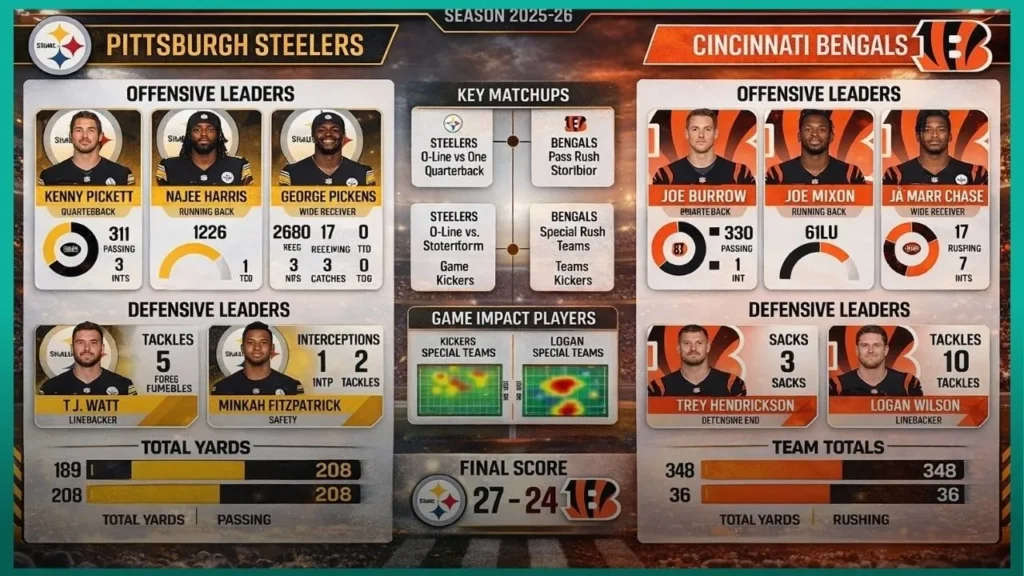
A comparison of team statistics provides a clear picture of the strengths and weaknesses of each side. Pittsburgh excelled in time of possession, rushing yardage, and defensive stops, reflecting a balanced approach to offensive control and defensive pressure. Cincinnati led in passing yards, demonstrating their ability to create explosive plays, but turnovers and limited rushing success prevented them from sustaining momentum.
This balance of offensive efficiency, defensive effectiveness, and situational execution ultimately favored Pittsburgh. The combination of fewer mistakes, better clock management, and strategic capitalization on key opportunities highlights how comprehensive game planning and execution determine outcomes in closely contested matchups.
What This Game Means for the Steelers Season
This victory provided a crucial boost for Pittsburgh’s AFC North campaign. Defeating a divisional rival not only enhances playoff positioning but also builds confidence within the roster. The balanced offensive performance, complemented by a disciplined defensive strategy, reinforces the team’s identity as a competitive and well-coached unit.
Maintaining this level of performance throughout the season will be essential for sustaining playoff aspirations. The Steelers demonstrated resilience, adaptability, and situational awareness, qualities that can define a successful campaign in the highly competitive AFC North.
What This Game Means for the Bengals Season
Despite the loss, Cincinnati showcased the potential of their offensive unit, particularly in explosive passing plays and skill-position talent. The game highlighted areas for improvement, such as ball security, third-down conversions, and establishing a more effective rushing attack to complement their passing game.
Future games will require the Bengals to address these weaknesses while building on their offensive strengths. Doing so could convert closely contested performances into wins, improving playoff prospects and overall team consistency.
Conclusion
The Pittsburgh Steelers vs Bengals match player stats reveal a competitive and strategically complex game. Pittsburgh secured the victory through balanced offense, strong defensive pressure, and efficient time management. Cincinnati displayed impressive passing production but struggled with turnovers and limited rushing success.
Individual player performances played a major role in shaping the outcome. Quarterbacks, running backs, wide receivers, and defensive leaders all contributed critical moments that defined the contest.
Ultimately, this matchup demonstrated why the Steelers and Bengals rivalry remains one of the most compelling in the NFL. Every possession, defensive stop, and scoring opportunity carried significant importance, creating an exciting and memorable game for fans and analysts alike.
FAQs
Who had the best performance in the Pittsburgh Steelers vs Bengals match?
Several players delivered strong performances, but Najee Harris and Ja’Marr Chase stood out. Harris controlled the rushing attack for Pittsburgh, while Chase produced the highest receiving yardage for Cincinnati.
Which quarterback had better stats in the Steelers vs Bengals game?
Joe Burrow recorded more passing yards, but Kenny Pickett demonstrated efficient decision making and led the Steelers offense to victory through balanced play calling.
Who led the rushing yards in the Steelers vs Bengals matchup?
Najee Harris led all players in rushing yards with more than one hundred yards on the ground, helping Pittsburgh control the pace of the game.
What were the key turning points in the Steelers vs Bengals game?
Key moments included a crucial fourth quarter sack by the Steelers defense and a long scoring drive that extended Pittsburgh’s lead late in the game.
How did the defenses perform in the Steelers vs Bengals matchup?
Both defenses delivered impactful plays. Pittsburgh applied consistent pressure and limited explosive plays, while Cincinnati created turnovers and several important stops during the second half.
VISIT MORE : Circle Magazine